
More life in your life.
Living well after 40 involves everyday choices and knowing which ones deserve your attention.
Best Whey Protein Powders for Adults 40+: A Practical Buying Guide?
Disclosure: this guide is for educational purposes and does not replace advice from your doctor or a registered dietitian. If you add affiliate links, disclose them clearly near the top of the page.
Disclosure: this guide is for educational purposes and does not replace advice from your doctor or a registered dietitian. If you add affiliate links, disclose them clearly near the top of the page.
The short answer
For most healthy adults over 40, the best whey powder is not the priciest or the most heavily marketed one. It is a third-party tested whey (isolate if dairy tends to bother you, concentrate if it doesn’t) that delivers roughly 20–30 g of protein and about 2.5 g of leucine per serving, with a short ingredient list, little added sugar, and a price per serving you can sustain.
Three ideas carry the rest of this guide:
- Powder is a convenience tool, not a requirement. Harvard Health describes powders as a useful option when it is hard to get enough protein from food, while noting that most people can meet their needs through diet.
- Quality control matters more than branding. Protein powders are sold as supplements, so the FDA does not review them for safety before sale. Independent certification is your best proxy.
- Protein works best alongside strength training. Powder supports muscle; lifting provides the signal to build it.
Why protein matters more after 40
Muscle mass peaks in early adulthood and then declines gradually. Reviews commonly estimate a loss of about 3–8% per decade after age 30, with the pace increasing after 60. Harvard Health puts the typical figure at roughly 3–5% per decade for most people and notes that adults who skip strength training can lose several pounds of muscle per decade, often replaced by fat. Inactivity, insulin resistance, and inadequate protein intake all contribute.
Aging muscle also becomes less responsive to protein. Researchers call this anabolic resistance: the same meal stimulates less muscle building than it would at 25. This is why experts focus not only on how much protein you eat per day but also on how much you get at each meal.
This is not a reason for alarm. Muscle loss is far from inevitable, and resistance training plus adequate protein is the best-supported way to slow it.
How much protein do you actually need?
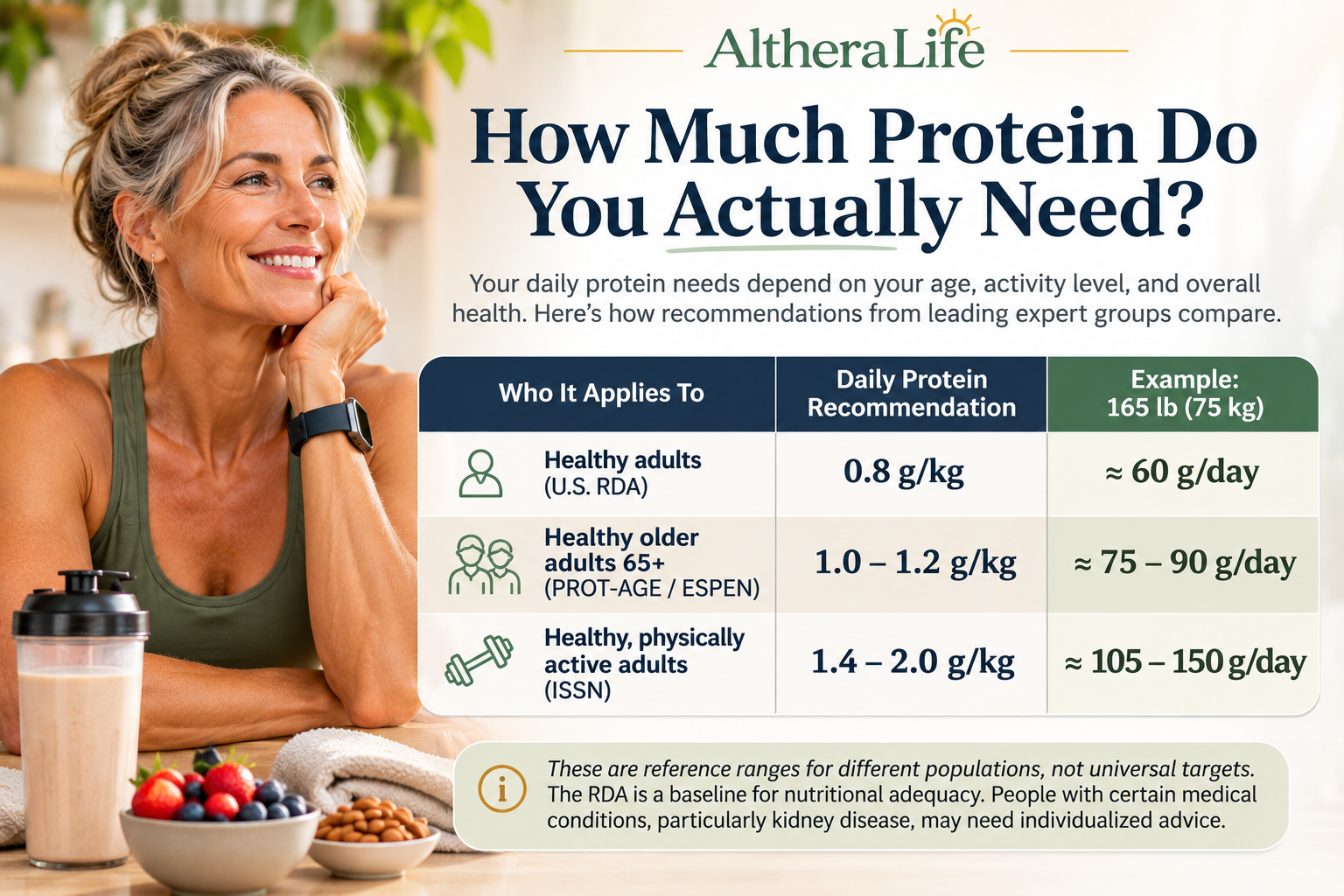
There is no single number, because it depends on your age, health, and activity level. Here are the most credible benchmarks, from different expert bodies:
Per-meal targets. PROT-AGE suggests about 25–30 g of protein per meal, containing roughly 2.5–2.8 g of leucine, to overcome the higher anabolic threshold of older muscle. The ISSN suggests 0.25 g/kg or an absolute 20–40 g per dose, with about 0.7–3 g of leucine, spread every 3–4 hours.
A worked example. For someone who weighs 75 kg (165 lb) and lifts weights regularly, the ISSN range works out to about 105–150 g of protein per day. Spread over three or four meals, that is roughly 25–40 g each. A single scoop of whey often supplies one meal’s worth of that.
Be careful with online “per pound” figures. Some popular articles suggest 1.2–1.6 g of protein per pound of body weight. That is more than double what the major position statements recommend, which are expressed per kilogram. Always check the unit.
A note of balance. Not every expert favors supplements. Harvard’s Walter Willett has said he is not enthusiastic about pushing intake above the typical range using supplements, and he singled out whey for concern about long-term effects. Harvard Health also states that most people can get enough protein from food. This is a good reason to use powder to fill gaps rather than replace meals.
Whey, casein, or plant? A quick comparison
Whey is the most studied option. It digests quickly, contains all the essential amino acids, and is naturally high in leucine, the amino acid that most strongly signals muscle building. The ISSN notes that rapidly digested proteins rich in essential amino acids and adequate leucine are the most effective at stimulating muscle protein synthesis.
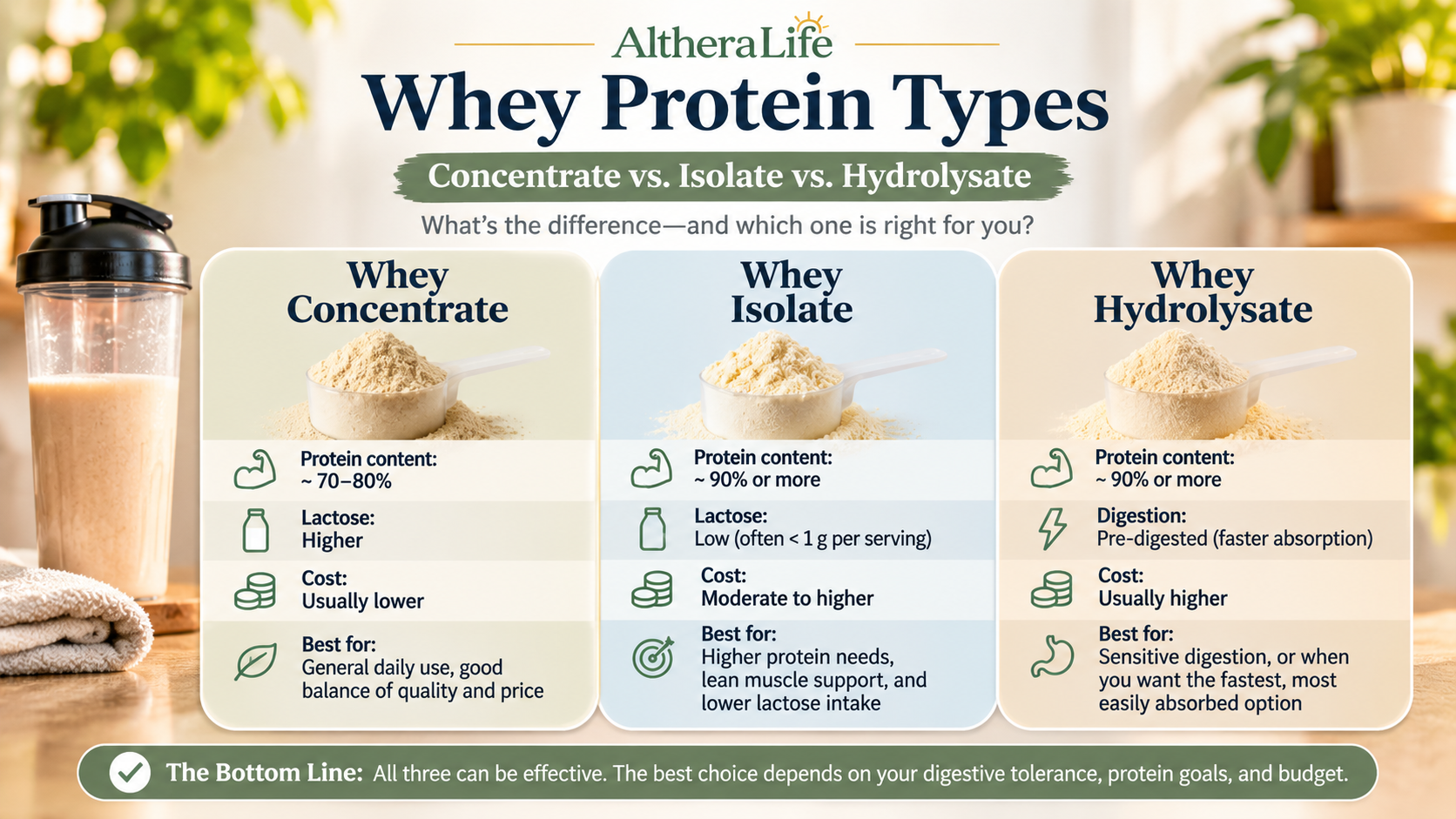
Whey comes in three forms:
- Concentrate is typically about 70–80% protein, with some lactose and fat. It is usually the most affordable.
- Isolate is at least 90% protein by weight, with very little lactose, fat, or carbohydrate. People who are lactose-sensitive often tolerate it better.
- Hydrolysate is pre-digested whey. It tends to be the most expensive, and the evidence does not show it builds more muscle than the other forms.
Casein digests slowly. The ISSN notes that 30–40 g before sleep can increase overnight muscle protein synthesis. It is optional, but handy if you struggle to get enough protein at dinner.
Plant proteins (pea, rice, soy) are a good choice for vegans or people with dairy intolerance. Harvard Health notes that rice and pea protein have been shown to stimulate muscle growth similarly to whey. In practice, you may need a slightly larger serving and a blend of sources to reach the same leucine and amino acid targets. Plant powders also deserve extra scrutiny for heavy metals (see below).
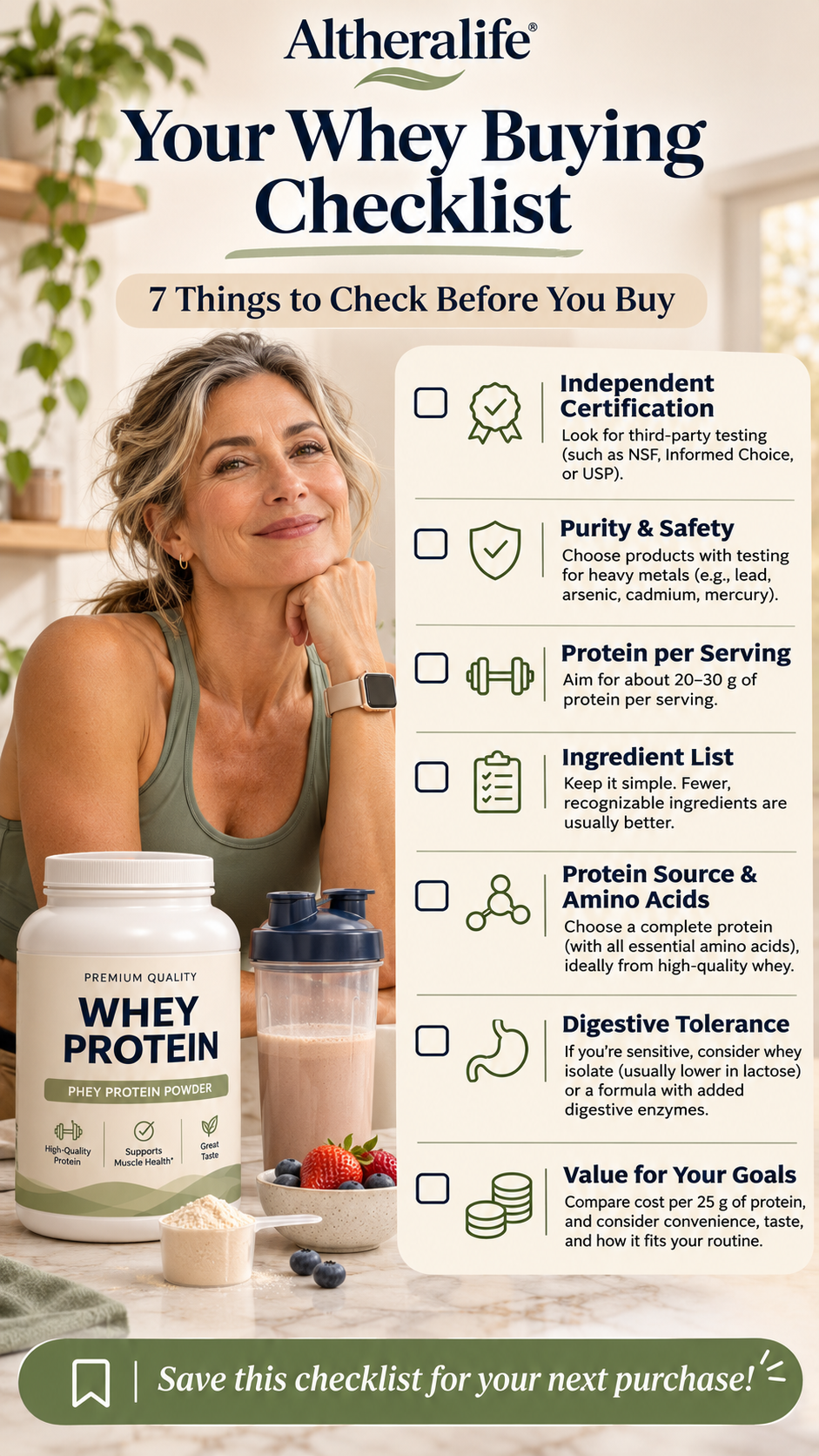
How to choose: a label checklist
1. Look for independent testing
This is the single most important filter. Harvard Health points to organizations such as NSF International, whose “Certified for Sport” designation verifies that the contents match the label, that the product is made under good manufacturing practices, and that it does not contain unsafe levels of toxic metals such as arsenic and mercury. Informed Sport, Informed Choice, and USP are other certifications you may see. Note the difference between a certified product and a product merely made in a certified facility: the second is weaker assurance.
2. Check for heavy metals
In October 2025, Consumer Reports tested 23 protein powders and ready-to-drink shakes. It found that more than two-thirds contained more lead in one serving than the organization considers safe for a full day, based on a conservative California-derived benchmark. Plant-based products averaged markedly more lead than dairy-based ones. Consumer Reports also noted that there are no federal limits for heavy metals in supplements, and its testers advised against daily use of most protein powders.
Putting this in perspective: trace amounts of heavy metals occur naturally in soil, and detectable does not always mean dangerous. But it is a strong argument for choosing certified products, favoring brands that publish recent lab results, and not relying on powder for every serving. Because results vary by brand and batch, check the latest Consumer Reports findings for the specific product you plan to buy.
3. Read the serving size against the protein content
Compare grams of protein to grams of powder per serving. A 30–35 g scoop with 25–28 g of protein indicates a purer product than one where 20 g of protein comes in a 35 g scoop.
4. Beware of proprietary blends and “amino spiking”
If a label lists a “proprietary blend” of whey concentrate, isolate, and amino acids without individual amounts, you cannot know how much of each is inside. Some manufacturers add cheap, nitrogen-containing ingredients (such as glycine or free amino acids) to inflate the apparent protein number. Prefer brands that list the full amino acid profile and the amount of each protein source.
5. Keep the ingredient list short
The ideal is simple: protein, a flavoring, a sweetener, and perhaps lecithin to help the powder mix. Be wary of long lists of gums, dyes, and fillers. Added sugar should be low, ideally under 3–5 g per serving.
6. Consider digestion
If standard whey causes bloating, try an isolate, which has far less lactose, or a product with added digestive enzymes. If symptoms persist, a different protein source (egg white or a plant blend) may suit you better.
7. Compare cost per serving, not per tub
Whey has become markedly more expensive. The Guardian’s Filter reported in October 2026 that demand, driven in part by GLP-1 weight-loss drugs and the “protein in everything” trend, has pushed the price of whey protein concentrate up as much as fivefold in recent years. Divide the tub price by the number of servings that deliver about 25 g of protein. A cheap tub with a small scoop may cost more per gram of protein than a premium one.
Whey powders worth considering
The table below combines what registered dietitians recommend with the Guardian’s blind and at-home taste tests (October 2026). Prices were reported by the Guardian and change often, so verify current pricing and certifications before you buy.
Product
Why it made the list
Trade-offs
Optimum Nutrition Gold Standard 100% Whey
The Guardian’s overall winner on taste in water and milk; about 24 g protein per serving; Informed Choice certified according to a dietitian reviewer; widely available and good value
Can clump if mixed by hand; confirm the current lab-test results for the specific flavor
Transparent Labs Whey Protein Isolate
A dietitian’s top pick: grass-fed isolate, certified by Informed Choice and Informed Protein, with an unflavored option containing only sunflower lecithin as an additive
Premium price (about $65 per the Guardian); Guardian testers found the flavored versions very sweet
Momentous Whey Protein Isolate
Cold-processed isolate with added digestive enzyme, a good fit for sensitive stomachs; 20 g protein per smaller scoop
Guardian testers found it thin when mixed with water
Dymatize ISO100
A hydrolyzed isolate with very low lactose and minimal carbohydrate and fat, popular among fitness educators for sensitive digestion; about 25 g protein per serving
Confirm current certification; hydrolyzed products are usually pricier
Thorne
The Guardian’s pick for creamy texture; mixes smoothly
Many testers found it very sweet and stevia-forward; about $65 for 30 servings
PEScience Select Whey
About 24 g protein per serving, wide flavor range, made in an NSF-certified facility according to a dietitian
The facility is certified, not necessarily each product
Factor Form (single-serve packets)
Most travel-friendly option in the Guardian’s tests, with a short, natural ingredient list
Not third-party certified; flavor divided testers
A note on taste versus quality. Taste panels like the Guardian’s are useful for finding something you will actually drink, but they measure flavor, not purity. Some products that scored poorly on taste (for example, in plain water) are favorites of dietitians for their testing and clean ingredient lists. Mixing with milk or blending into a smoothie improved the flavor of nearly every powder in the Guardian’s second round.
What about collagen blends? Collagen is not a complete protein and is low in leucine, so it should not be your main muscle-building protein. Blended products can have a place if you like them, but they are not necessary for muscle.
How to use whey well after 40
- Aim for a protein anchor at every meal. Harvard’s Dr. Frank Hu advises spreading protein across the day rather than getting most of it at one meal.
- Use powder to fill gaps. Breakfast is often the weakest protein meal. Blend a scoop into a smoothie or stir it into oatmeal or coffee.
- Pair it with resistance training. Training twice to three times a week is the strongest lever for preserving muscle with age.
- Don’t stress about the exact timing. The ISSN notes that the benefits come from pre- or post-workout intake and that the anabolic effect of training lasts at least 24 hours.
- Consider casein or a slow-digesting option before bed if dinner is light.
- Stay hydrated and build the rest of the plate around vegetables, fiber, and healthy fats.
Who should talk to a professional first
Check with your doctor or a registered dietitian before adding protein powder if you:
- Have kidney disease. PROT-AGE specifically notes that people with severe kidney disease who are not on dialysis may need to limit protein.
- Take medications or have a chronic health condition.
- Are pregnant or breastfeeding. Harvard Health notes that some powders contain added botanicals that may not be suitable.
- Have a milk allergy, or persistent digestive symptoms after using whey.
Frequently asked questions
Is whey protein safe for people over 40? For healthy adults, protein intakes in the ranges recommended by major position statements are generally considered safe. The ISSN states that intakes of 1.4–2.0 g/kg per day are safe for healthy, active people. People with kidney disease and other conditions should get individual medical guidance.
Isolate or concentrate? Isolate has more protein per scoop and less lactose, and tends to be gentler on sensitive stomachs. Concentrate is usually cheaper and works well if you tolerate dairy.
Do I need protein powder at all? No. Eggs, dairy, fish, poultry, legumes, and tofu can all do the job. Powder is simply a practical option when your appetite, schedule, or budget makes whole-food protein difficult.
Is plant protein as good as whey? It can support muscle growth similarly when the total protein and amino acids are adequate. Plant blends may need a larger serving, and Consumer Reports found higher lead levels, on average, in plant-based powders, so third-party testing matters even more.
How many scoops a day? One scoop (20–30 g) is enough for most people to fill a gap. Count the protein from your food first.
Final thoughts
Choosing a whey protein after 40 is mostly about three things: verified quality, a serving that delivers enough protein and leucine, and a price and flavor you can live with. Start with a certified product, mix it into meals you will enjoy, and pair it with strength training. That combination, more than any single brand, is what the research supports.
Sources and further reading
- Jäger R., et al. (2017). International Society of Sports Nutrition Position Stand: protein and exercise. Journal of the International Society of Sports Nutrition, 14:20. https://pubmed.ncbi.nlm.nih.gov/28642676/
- Bauer J., et al. (2013). Evidence-based recommendations for optimal dietary protein intake in older people: a position paper from the PROT-AGE Study Group. Journal of the American Medical Directors Association, 14(8), 542–559. https://experts.mcmaster.ca/scholarly-works/55421
- Deutz N.E.P., et al. (2014). Protein intake and exercise for optimal muscle function with aging: recommendations from the ESPEN Expert Group. Clinical Nutrition. doi:10.1016/j.clnu.2014.04.007
- Harvard Health Publishing. Are you eating enough protein? https://www.health.harvard.edu/nutrition/are-you-eating-enough-protein
- Harvard Health Publishing. The scoop on protein powder. https://www.health.harvard.edu/staying-healthy/the-scoop-on-protein-powder-2020030918986
- Harvard Health Publishing. A guide to combatting sarcopenia and preserving muscle mass as you get older. https://www.health.harvard.edu/healthy-aging-and-longevity/a-guide-to-combatting-sarcopenia-and-preserving-muscle-mass-as-you-get-older
- Harvard T.H. Chan School of Public Health, The Nutrition Source. Protein. https://www.hsph.harvard.edu/nutritionsource/protein-full-story/
- Consumer Reports (October 2025). Protein powders and shakes: heavy metals test methodology and results; coverage by NPR: https://www.kpbs.org/news/health/2025/10/16/a-study-found-lead-in-popular-protein-powders-heres-why-you-shouldnt-panic
- The Guardian, The Filter US (11 October 2026). The 10 best (and worst) whey protein powders, taste-tested.
- Willett W., quoted in: Protein is good for you, but too much of it may not be. https://inquirer.com/philly/health/personal-best/protein-is-good-for-you-but-too-much-of-it-may-not-be-20171127.html
LET’S HEAR FROM YOU
Your issue.
Our next story.
What would you love to explore next? Suggest a topic, share an idea, or tell us what you’d like to see in our articles and videos.
Altheralife.
© 2025 Altheralife. All rights reserved.
Explore
Suporte
About Us
Contact
Editorial Policy
Newsletter
Legal & Privacy
Privacy Policy
Affiliate Disclosure
Terms of Use
Cookie Setting
Altheralife is operated by BIG ASS. E CONS. LTDA, CNPJ: 24.699.246/0001-61.