
More life in your life.
Living well after 40 involves everyday choices and knowing which ones deserve your attention.
Lose the Weight, Keep the Muscle: A Strength Guide for Adults 40+ on GLP-1 Medications
By the Altheralife team · Last updated November 2026
This article is educational and is not medical advice. Do not start, stop, or change any medication, and do not change your diet or exercise routine in a way that conflicts with your care team’s guidance. Talk to your prescriber, a registered dietitian, or a physiotherapist before beginning a new strength program, especially if you have kidney disease, diabetes, heart disease, joint problems, or have been inactive for a long time.

The short version
GLP-1 medications such as semaglutide (Ozempic, Wegovy) and tirzepatide (Mounjaro, Zepbound) have changed what is possible in weight management. They also raised a question that the scale cannot answer: how much of the weight you lose is fat, and how much is muscle?
In clinical trials, a meaningful share of the weight lost on these drugs showed up as “lean mass,” which includes muscle but also water and organ tissue. Expert groups now agree on the practical answer: pair the medication with resistance training and enough protein, and judge progress by strength and function, not only by weight.
Three ideas carry this guide:
- Muscle loss is a real risk, but a manageable one. It is not a reason to avoid treatment. It is a reason to train and eat with intention.
- After 40, the margin for error shrinks. Muscle is already declining slowly, responds less to protein, and matters more for metabolism and independence.
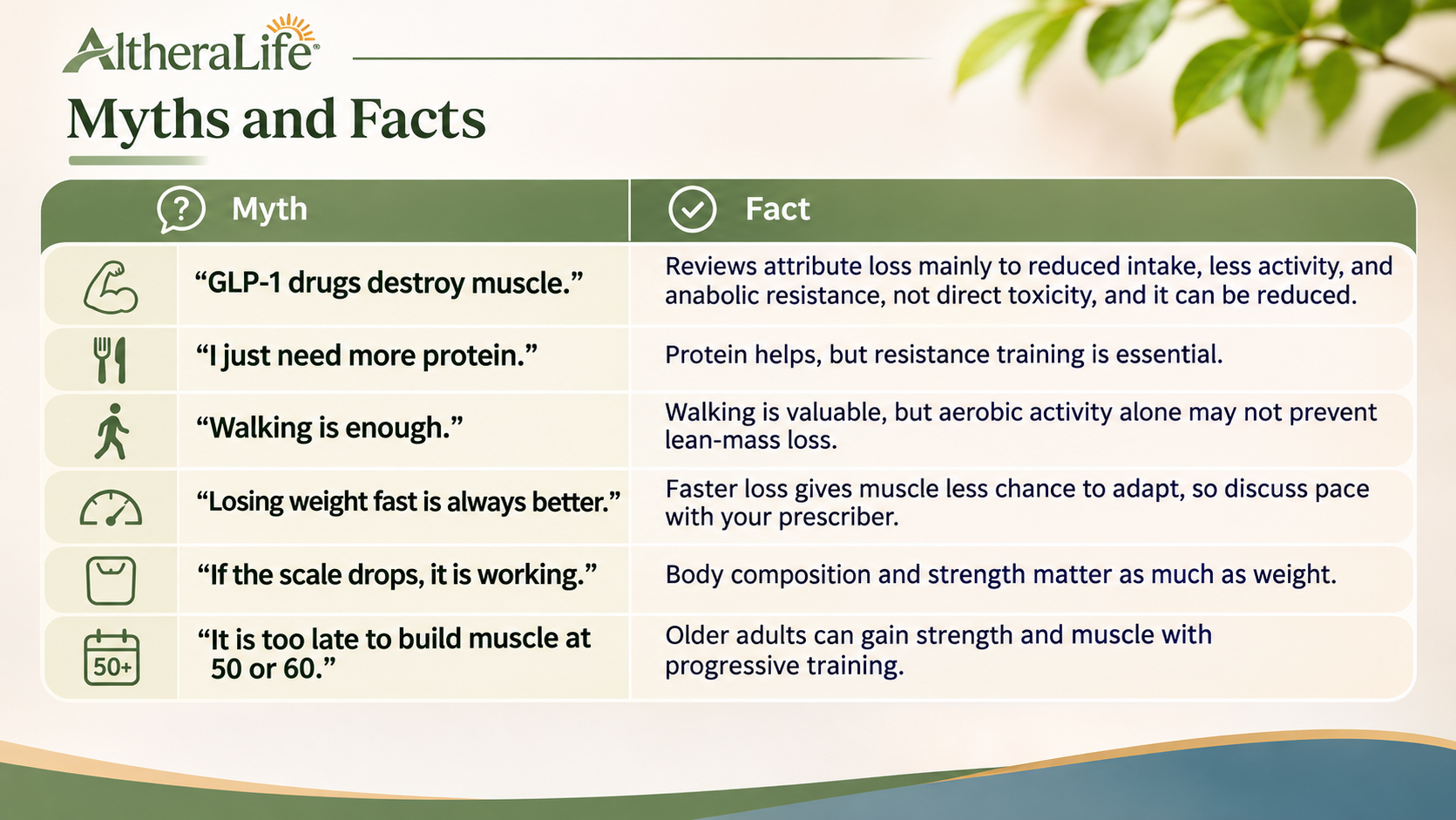
- Strength training is the strongest lever you control. Protein alone is not enough, and walking alone may not be either.
Why this conversation matters now
In late 2025 and 2026, concern about muscle on GLP-1 drugs moved from specialist conferences into everyday conversations, and for good reason. These medications reduce appetite so effectively that calorie and protein intake can drop together. Fast weight loss without a muscle-building signal creates exactly the conditions in which the body gives up muscle along with fat.
In 2025, four leading organizations (the American Society for Nutrition, the American College of Lifestyle Medicine, the Obesity Medicine Association, and The Obesity Society) published a joint advisory on nutrition during GLP-1 therapy, in The American Journal of Clinical Nutrition and other journals. One of its eight priorities is preserving muscle and bone through adequate protein and strength training. The group’s message, in the words of its lead author Dr. Dariush Mozaffarian of Tufts University, is that medication alone is not enough to sustain the benefits and avoid pitfalls.
What the trials actually show
Headlines often say that “up to 40% of the weight lost on GLP-1 drugs is muscle.” The real picture is more nuanced.
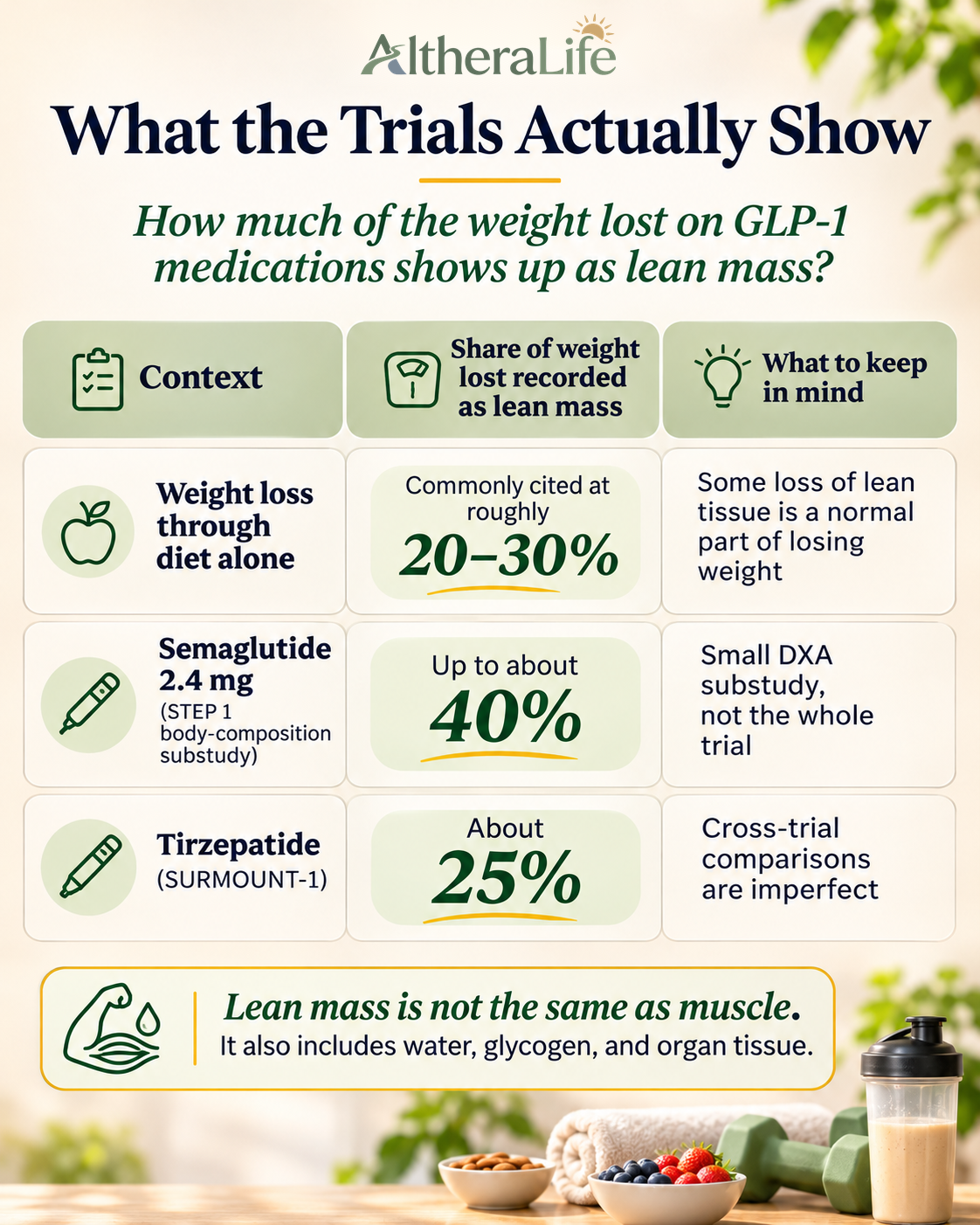
Lean mass is not the same as muscle. DXA scans measure “lean mass,” which includes water, glycogen, and organ tissue. The true muscle share of the loss is probably lower, and researchers debate how best to measure it. In the semaglutide substudy, lean mass fell in absolute terms, yet the proportion of the body that was lean tissue actually rose slightly, because fat fell faster.
Still, the concern is legitimate. A 2024 review in Obesity Reviews estimated that people on these drugs in trials lost 10% or more of their muscle mass over 68–72 weeks, which the authors compared to roughly 20 years of age-related muscle loss. (Note that this review was supported by Abbott Nutrition, a company that sells nutrition products, which is worth knowing when reading its recommendations.) Reviews published in 2026 describe the loss as real but unevenly distributed, and say it is explained mainly by reduced intake, lower activity, and anabolic resistance, rather than by direct damage to muscle.
What we do not know yet. As of the most recent reviews, large randomized trials testing resistance training specifically in people taking GLP-1 drugs are still underway. Current recommendations are extrapolated from the broader weight-loss literature, which consistently shows that resistance training helps preserve muscle during calorie restriction.
Why it matters even more after 40
1. You are starting from a declining baseline. Muscle mass falls by roughly 3–8% per decade after about age 30, and faster after 60. Adding rapid weight loss on top of this drift can tip the balance toward weakness. Our pillar article, Muscle Is Medicine, explains why muscle is also a major organ for blood sugar control and long-term health.
2. Muscle responds less to protein. After 40, the same meal stimulates less muscle building (anabolic resistance). This is why experts suggest about 25–30 g of protein per meal for older adults rather than small token amounts.
3. Sarcopenic obesity is a real risk. This is the combination of excess body fat and low muscle mass or strength. Reviews flag older adults, postmenopausal women, and people who already have low muscle as the groups at greatest risk of losing too much muscle on these drugs.
4. What you lose can come back as fat. Clinical commentary on this topic notes that weight regained after stopping weight-loss treatment tends to return mostly as fat unless resistance exercise is maintained. Protecting muscle now may make it easier to protect your results later.
The three-pillar plan
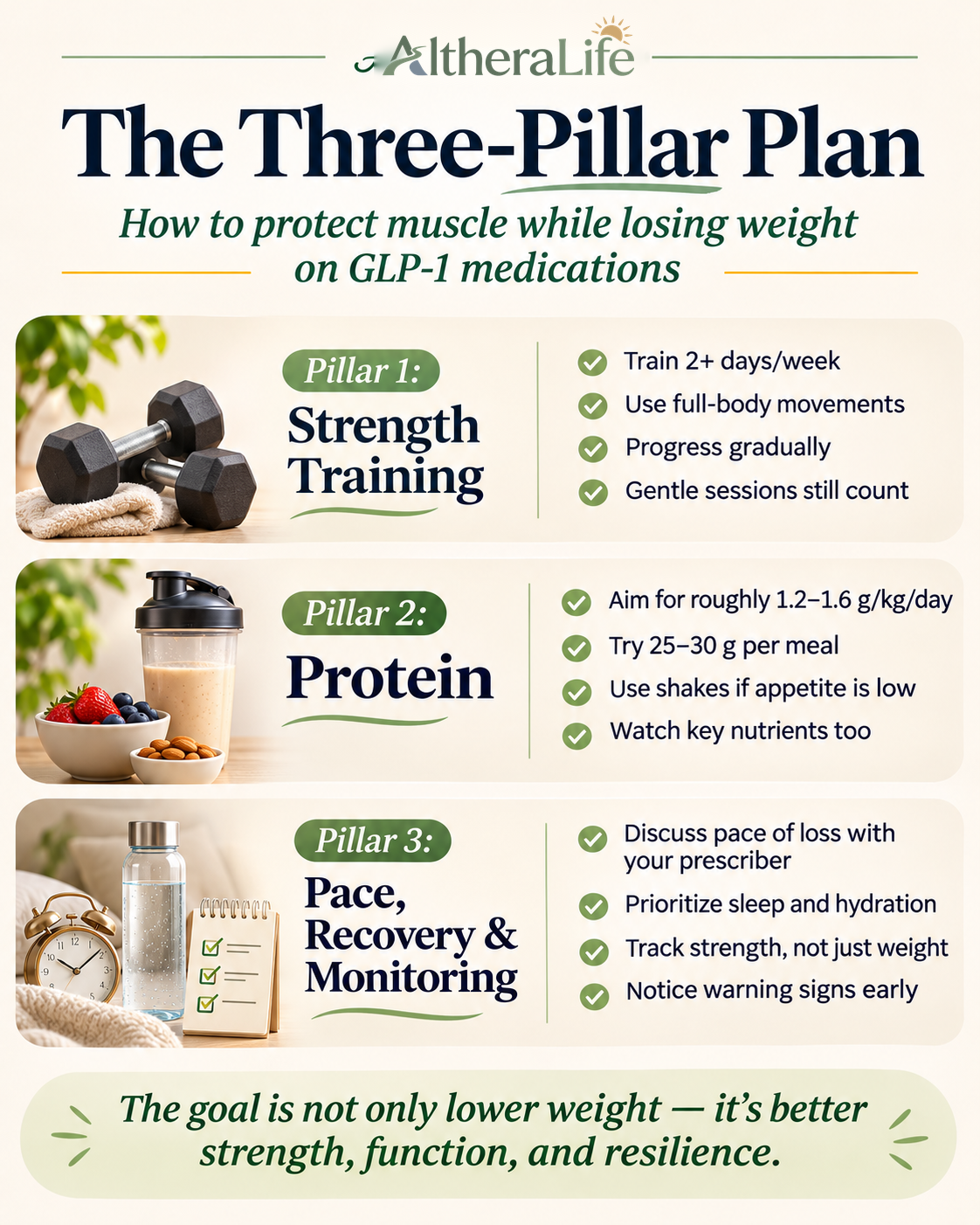
Pillar 1: Strength training (the non-negotiable)
The World Health Organization recommends that adults do muscle-strengthening activities at moderate or greater intensity, involving all major muscle groups, on two or more days a week. Clinical education materials developed with the Obesity Medicine Association add an important point: increased protein alone is not enough to preserve lean mass, and general activity or aerobic exercise alone may not prevent its loss. Mixed training that combines resistance and aerobic work has the best support during weight loss.
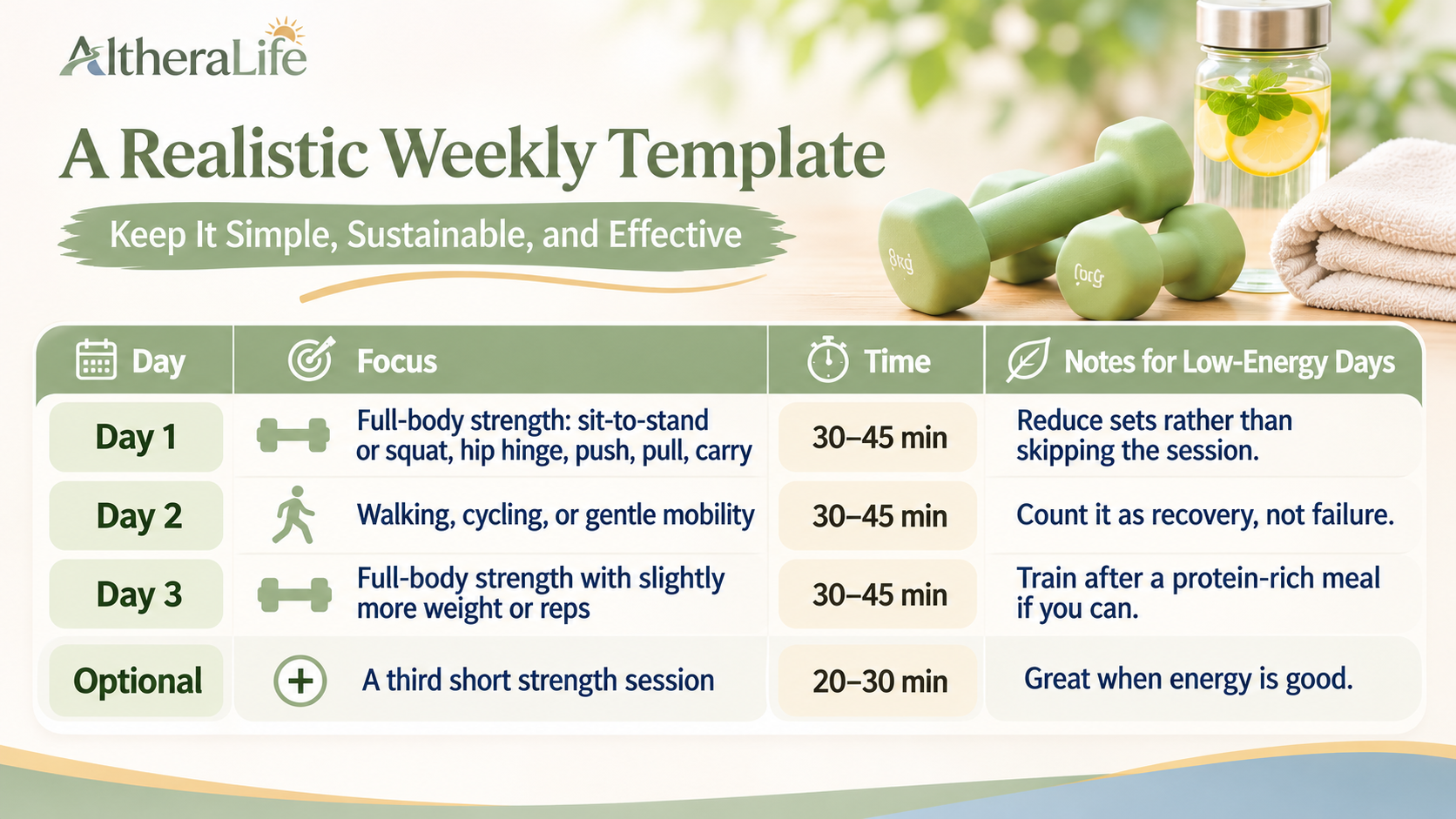
Principles that help
- Start light and add progressively. More weight, reps, or sets over weeks gives muscle a reason to stay.
- Train legs, hips, back, chest, and core, the muscles that protect independence.
- Plan around side effects. Many people feel nausea or fatigue after dose changes. Gentle sessions are better than none, and a physiotherapist can help you adapt.
- Consider supervised training at the start to learn technique safely.
Pillar 2: Protein (and a little strategy)
General guidelines for protein range from about 0.8 g/kg per day for healthy adults up to 1.2–1.5 g/kg for older adults and those with illness. Reviews focused on GLP-1 therapy commonly point to about 1.2–1.6 g/kg per day, while some sports-oriented sources go higher. Your own target depends on your age, health, kidney function, and body size, so ask your clinician or dietitian whether to base it on your current or goal weight.
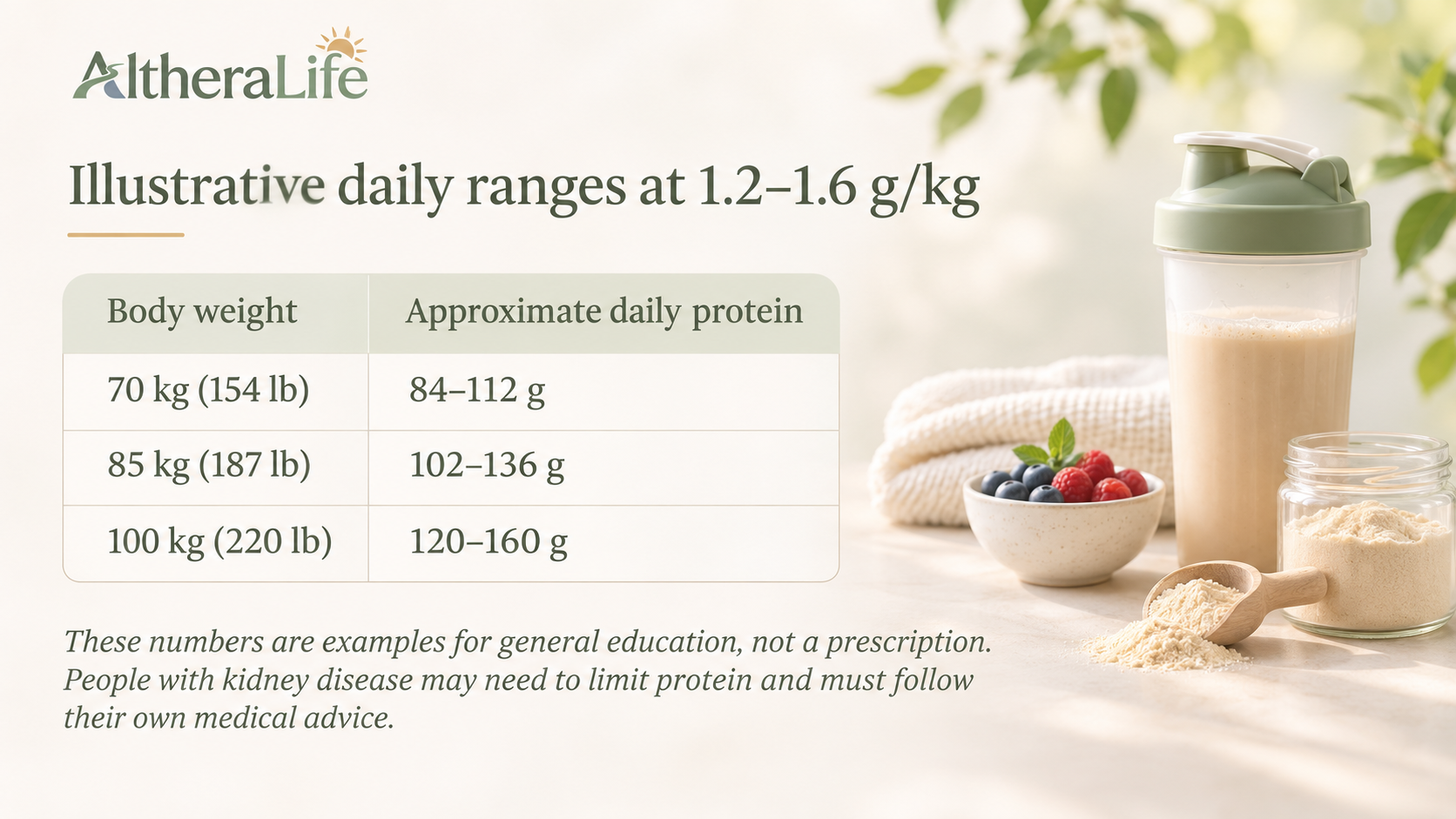
These numbers are examples for general education, not a prescription. People with kidney disease may need to limit protein and must follow their own medical advice.
Making it practical when appetite is low
- Eat the protein first. Start meals with eggs, Greek yogurt, fish, poultry, tofu, or legumes before other foods.
- Aim for roughly 25–30 g at your main meals, and add protein-rich snacks if meals are small.
- Use shakes or oral nutrition supplements when food falls short. Reviews describe them as a scalable way to improve protein and micronutrient intake during GLP-1 therapy.
- Choose quality products. If you use a whey or plant powder, look for independent testing and check recent heavy-metal results. Our guide to choosing a whey protein for adults 40+ explains how.
- Watch micronutrients too. Low appetite can also reduce iron, calcium, and magnesium intake. The joint advisory lists preventing nutrient deficiencies as a priority, and suggests watching for signs such as fatigue or hair loss.
Pillar 3: Pace, recovery, and monitoring
- Ask your prescriber about the pace of weight loss. Faster loss gives muscle less time to adapt.
- Prioritize sleep and recovery, where muscle adaptation happens.
- Stay hydrated, especially if you have gastrointestinal side effects.
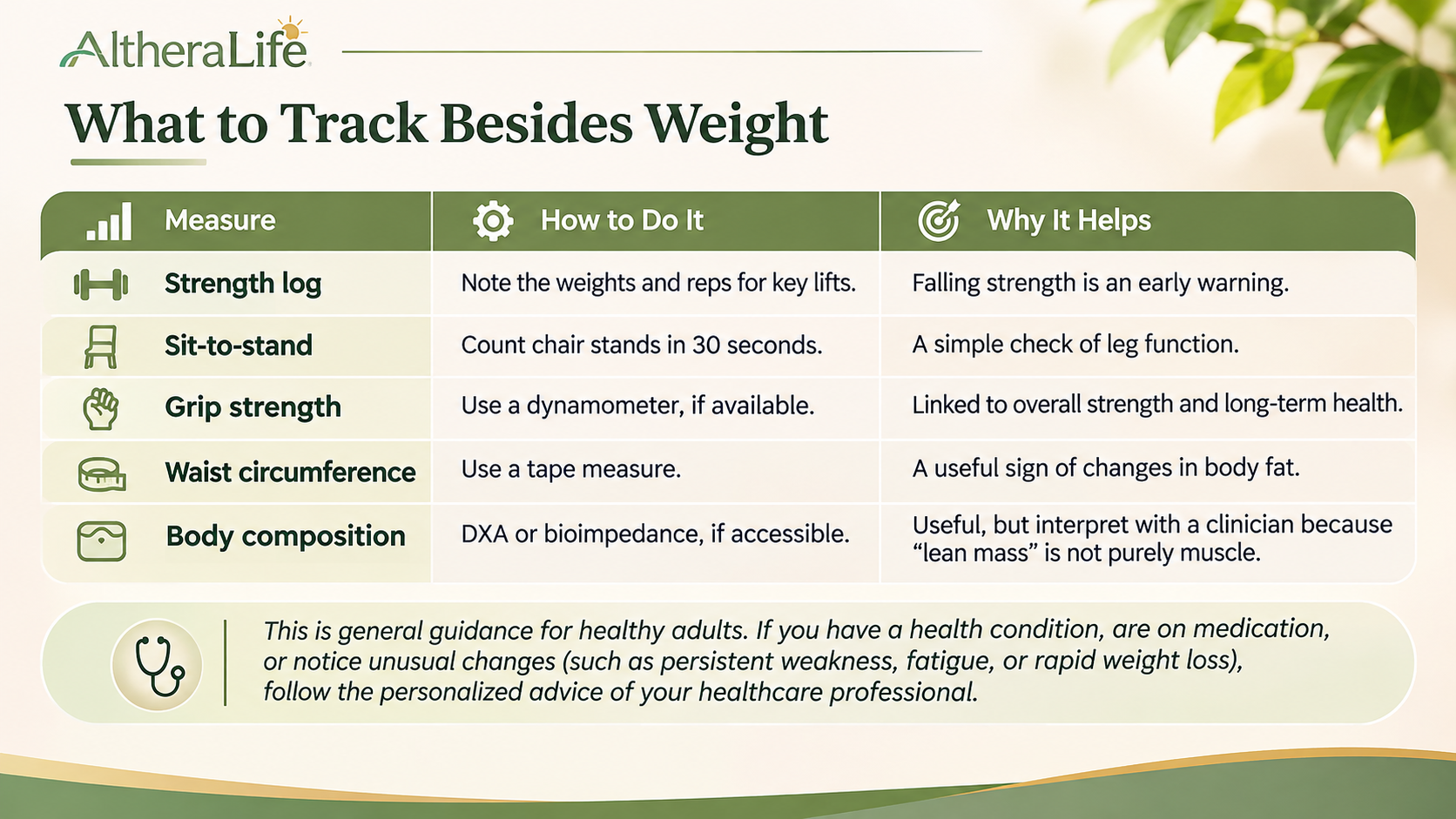
- Track more than the scale. Weight alone cannot tell you what kind of tissue you are losing.
The next frontier: drugs that protect muscle
One of the most closely watched developments is a new class of muscle-preserving treatments. In 2026, Nature Medicine published the phase 2 BELIEVE trial of bimagrumab, an investigational antibody that blocks activin signaling pathways, combined with semaglutide in 507 adults with obesity. Semaglutide alone produced about a 7.4% loss of lean mass, while the high-dose combination reduced lean mass by only about 2.9% and produced larger fat loss. Bimagrumab alone slightly increased lean mass. Reported side effects included muscle spasms and acne. The trial was funded by Eli Lilly, and bimagrumab is not an approved treatment. Other companies have reported early results for different muscle-sparing candidates.
What this tells us is that the field is shifting from “how much weight?” to “what kind of weight?”. But no drug replaces the basics. These are investigational therapies, and training and protein will still matter.
Frequently asked questions
Do I need to lift weights if I am on a GLP-1 medication? Expert groups recommend resistance training for people using these drugs for obesity, together with adequate protein. Start with what is safe for you and increase gradually.
How much protein should I eat? Many reviews suggest roughly 1.2–1.6 g/kg per day, but the right number depends on your health and kidney function. Ask your clinician or dietitian.
Can I use protein powder? Yes, it can help when food intake is low. Choose a third-party tested product and treat it as a supplement to meals, not a replacement for them.
Will I regain weight if I stop the medication? Many people do, and regained weight tends to return as fat unless muscle-building habits continue. Keeping strength training in your routine is one of the best ways to protect your results.
Is this advice different for women after menopause? Postmenopausal women are one of the groups flagged as being at higher risk of muscle loss, so strength training and protein deserve extra attention. A dietitian or physician can personalize the plan.
Final thoughts
GLP-1 medications can be powerful tools, and strength is what lets you keep the benefits. The goal is not just a lower number on the scale, but a body that is stronger, more resilient, and better prepared for the decades ahead. Pair your treatment with two or three strength sessions a week, protein at every meal, and a care team that tracks more than weight. That is the pattern the current evidence supports.
Sources and further reading
- Mozaffarian D., et al. (2025). Nutritional priorities to support GLP-1 therapy for obesity: a joint advisory from the American College of Lifestyle Medicine, the American Society for Nutrition, the Obesity Medicine Association, and The Obesity Society. The American Journal of Clinical Nutrition, 122, 344–367. https://pubmed.ncbi.nlm.nih.gov/40450457/
- The Obesity Society. Nutritional priorities to support GLP-1 therapy for obesity. https://obesity.org/nutritional-priorities-to-support-glp-1-therapy-for-obesity
- Mechanick J.I., et al. (2025). Strategies for minimizing muscle loss during use of incretin-mimetic drugs for treatment of obesity. Obesity Reviews, 26(1), e13841. https://pmc.ncbi.nlm.nih.gov/articles/PMC11611443/
- Wilding J.P.H., et al. (2021). Once-weekly semaglutide in adults with overweight or obesity (STEP 1). New England Journal of Medicine. doi:10.1056/NEJMoa2032183
- Wilding J.P.H., et al. (2021). Impact of semaglutide on body composition in adults with overweight or obesity: exploratory analysis of the STEP 1 study. Presented at ENDO 2021. https://endocrinenews.endocrine.org/semaglutide-reduces-excess-body-fat-in-people-with-obesity/
- Heymsfield S.B., et al. (2026). Bimagrumab plus semaglutide alone or in combination for the treatment of obesity: a randomized phase 2 trial. Nature Medicine. doi:10.1038/s41591-026-04204-0
- American Diabetes Association (2025). New GLP-1 therapies enhance quality of weight loss by improving muscle preservation (BELIEVE presentation, ADA Scientific Sessions). https://www.biospace.com/press-releases/new-glp-1-therapies-enhance-quality-of-weight-loss-by-improving-muscle-preservation
- Moscucci F., et al. (2026). A narrative review on GLP-1 receptor agonists for obesity in older women: maximizing weight loss while preserving lean mass. Nutrients, 18(4), 632. doi:10.3390/nu18040632
- GLP-1 receptor agonists and skeletal muscle: the risk of sarcopenic obesity and the role of resistance training. A narrative review (2026). Quality in Sport, 69:74557. https://doi.org/10.12775/QS.2026.69.74557
- World Health Organization (2020). WHO guidelines on physical activity and sedentary behaviour. https://www.ncbi.nlm.nih.gov/books/NBK566048/
- Bauer J., et al. (2013). Evidence-based recommendations for optimal dietary protein intake in older people: a position paper from the PROT-AGE Study Group. Journal of the American Medical Directors Association, 14(8), 542–559.
- Obesity Action Coalition and Obesity Medicine Association clinician education materials: Managing side effects of GLP-1 therapy. https://www.obesityaction.org/wp-content/uploads/A1371-Clinician-Managing-Side-Effects-Paradigm.pdf
- Harvard Health Publishing. A guide to combatting sarcopenia and preserving muscle mass as you get older. https://www.health.harvard.edu/healthy-aging-and-longevity/a-guide-to-combatting-sarcopenia-and-preserving-muscle-mass-as-you-get-older
LET’S HEAR FROM YOU
Your issue.
Our next story.
What would you love to explore next? Suggest a topic, share an idea, or tell us what you’d like to see in our articles and videos.
Altheralife.
© 2025 Altheralife. All rights reserved.
Explore
Suporte
About Us
Contact
Editorial Policy
Newsletter
Legal & Privacy
Privacy Policy
Affiliate Disclosure
Terms of Use
Cookie Setting
Altheralife is operated by BIG ASS. E CONS. LTDA, CNPJ: 24.699.246/0001-61.